Introduction
Search Engine Optimization (SEO) is a critical pillar of digital marketing and long-term growth for Australian businesses. Whether you are a small local operator or a scaling company with multiple staff, understanding how long SEO takes to work will help set expectations and guide your business strategy. SEO is not just about ranking higher in search engines—it’s about improving user experience, building a strong backlink profile, optimising your website structure, and executing a targeted content marketing strategy.
As a digital marketing and automation consultant, I help Australian business owners navigate SEO efforts, strengthen their domain authority, and implement a tailored keyword strategy that generates sustainable results. Effective SEO combines technical SEO, content creation, internal linking, link building, and consistent monitoring via tools like Google Analytics, Google Search Console, and PageSpeed Insights to ensure strong website performance and growth.
What Is SEO and Why Does It Take Time?
SEO involves optimising your website so it can be properly indexed and ranked by search engines. Unlike paid ads, which deliver immediate visibility, SEO builds gradually through consistent SEO efforts like keyword research, content creation, and link building.
SEO vs. Paid Ads
| Factor | SEO | Paid Ads |
|---|---|---|
| Speed | Slow; results in months or years | Immediate visibility |
| Cost | Lower long-term investment | Higher short-term cost |
| Longevity | Sustainable, long-lasting | Ends when budget stops |
The reason SEO takes time is because search engine algorithms evaluate multiple factors including website structure, content quality, link profiles, and overall website health. Algorithm updates like the Google core algorithm updates or the Google Product Reviews Update can also influence timelines. Regular website audits, content audits, and technical improvements such as fixing crawl errors, improving Page Speed, and adopting mobile-first indexing ensure your site continues to meet search engine expectations.
The Typical SEO Timeline — What To Expect
General Timeframes
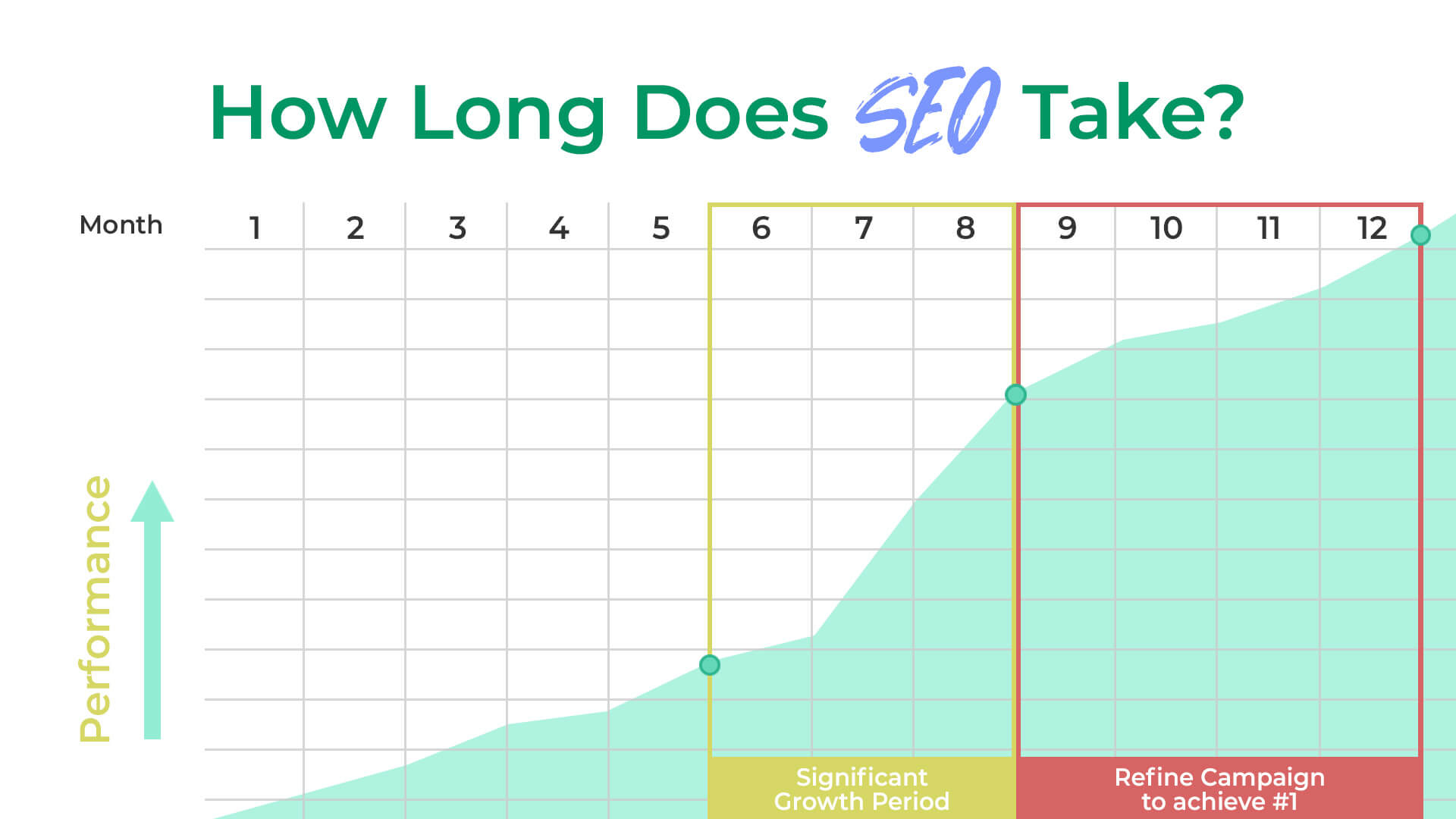
Most businesses can expect to see results within 3–6 months, with more competitive industries often requiring 12+ months. Leading pages in search results are often over two years old, highlighting the compounding effect of strong SEO foundations like keyword rankings, internal links, and content marketing.
Timeline Breakdown
| Month | Activities | Expected Results |
|---|---|---|
| 1–2 | Website audit, strategy, technical fixes | Planning & foundation, no visible rankings yet |
| 3–4 | Content creation, PR, link building plan | Early SERP movement, slight traffic increases |
| 5–6 | More content, internal linking, technical SEO | Rankings for long-tail keywords start |
| 6–12 | Scaling content, backlinks, local SEO | Competitive keyword rankings, steady traffic |
Monitoring with Google Analytics 4, Screaming Frog, and heatmap testing helps refine campaigns, measure click-through rates, and track user behaviour.
Factors Influencing How Fast SEO Works
- Existing Content & Website Structure: Well-optimised sites with strong internal links and a clean website structure rank faster.
- Competition: Less competitive industries and local search often see quicker results. Using a Google Business Profile is critical for local SEO.
- Website Age & Domain Rating: Older websites with strong domain authority and link profiles are rewarded more quickly.
- Content Creation & Strategy: Consistently publishing optimised content aligned with a content marketing strategy accelerates SEO.
- Backlinks & Digital PR: A strong link profile supported by guest blogging and outreach improves visibility.
- Technical SEO & Structured Data: Speed, responsive design, schema markup, and fixing crawl errors strengthen results.
- Algorithm Updates: Updates from Google Search Central, Google Search Advocate, or Google Sandbox delays must be monitored.
Step-by-Step Guide — What Happens Month By Month
- Month 1–2: Run a full website audit with tools like Screaming Frog. Implement technical fixes (improve Page Speed, responsive design, mobile usability). Conduct keyword research and set a clear keyword strategy based on keyword difficulty, keywords search volume, and keyword optimization.
- Month 3–4: Start publishing content with strong keyword selection. Build backlinks via PR and guest blogging. Update sitemaps in Google Search Console. Set up Google Analytics 4 to monitor progress.
- Month 5–6: Focus on long tail keyword rankings, refine internal linking, and track click-through rate improvements. Optimise for SERP features like Featured Snippets.
- Month 6–12+: Scale your content creation, expand the link building plan, and target competitive keywords. Conduct A/B testing on landing pages and leverage Google Ads for conversion insights. Use the Wayback Machine to review historical changes and refine your content strategy.
How Can You Speed Up SEO Results?
- Technical SEO: Optimise for mobile-first indexing, schema markup, fast Page Speed, and efficient crawling. Monitor with a Google PageSpeed insight score.
- Content Creation & Audit: Regularly produce optimised blogs, landing pages, and content updates guided by a content audit.
- Link Building & PR: Execute a targeted link building plan to strengthen your link profile and domain authority.
- Adaptability: Stay up to date with Google core algorithm updates, Google Now, and changes in search engine algorithms.
- Conversion Rate Optimization (CRO): Use A/B testing, heatmap testing, and insights from user behaviour to improve landing pages and increase ROI.
Frequently Asked Questions
Can SEO bring immediate results? Only in ultra-low competition niches. For most businesses, SEO requires patience.
What is the fastest way to see SEO results? A combination of technical SEO, optimised content creation, and a strong link profile.
Do established sites see results faster? Yes, sites with strong domain rating and content strategy improve quicker.
How do I know if SEO is working? Improvements in keyword rankings, traffic growth in Google Analytics, and better click-through rates are strong indicators.
How do algorithm updates affect SEO timelines? Algorithm updates can shift rankings. Sometimes a website overhaul or changes to your CMS platforms may be required.
Signs Your SEO Is Starting to Work
- Early visibility for long-tail keywords.
- Consistent growth in organic traffic.
- Increased crawl activity by search engines.
- Appearance in SERP features like Featured Snippets.
- Improved website health and fewer crawl errors.
Conclusion
SEO is a long-term investment that requires patience, strategy, and adaptability. Australian business owners who embrace SEO through a balanced mix of technical SEO, content marketing, and link building will see sustainable results over time. By setting clear goals, tracking progress in Google Analytics 4, and staying informed through Google Search Central, you can overcome challenges such as algorithm updates and continue improving your digital presence.
If you’re ready to grow your business with SEO, we can help. From website audits and keyword optimization to link building plans and conversion rate optimization, we work with Australian businesses to deliver measurable results. Let’s develop a strategy that maximises your SEO efforts, enhances user experience, and scales your business for long-term success.